



Getting Around Washington, DC – Part 4 – The Metro Subway
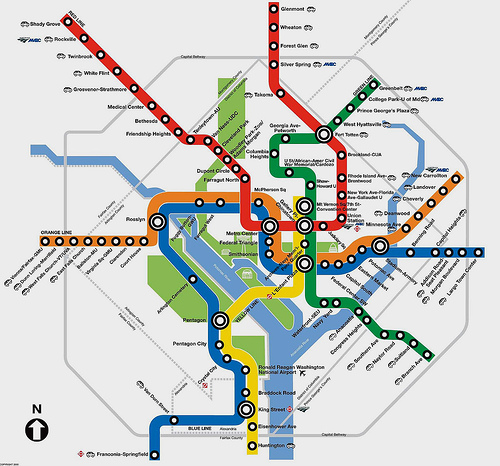
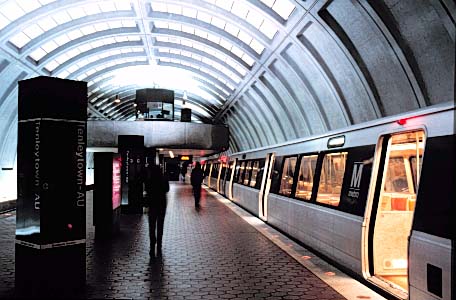 The Washington subway system (The Metro) is a great way to get around the area. Using a hub and spoke layout, there are five lines or routes – the Red, Yellow, Green, Blue and Orange Lines that cover different areas of the metro Washington area. Train lines interconnect at various stations, sometimes requiring the rider to change subway levels within a station. System maps are posted at each station and on all trains or available online.
Farecards & MetroRail Passes
The cost to ride the metro is based on the distance you travel and the time of day (rush hour is a bit higher). Costs range from $1.35 for short rides, to a maximum of $3.90 for the longest rides.
There are a few options from pay-per-ride using a rechargeable MetroRail Farecard to a daily MetroRail Pass ($6.50) or a weekly pass ($22.00-$32.50). However passes have specific conditions such as limited travel times (not before 9:30 AM weekdays, etc.) so check carefully before purchasing. The daily pass is ideal if you are planning on riding the Metro more than a couple times a day, especially on weekends. To determine how much your ride will cost, check the fare chart at your starting station; it will list the cost from that station to any other station.
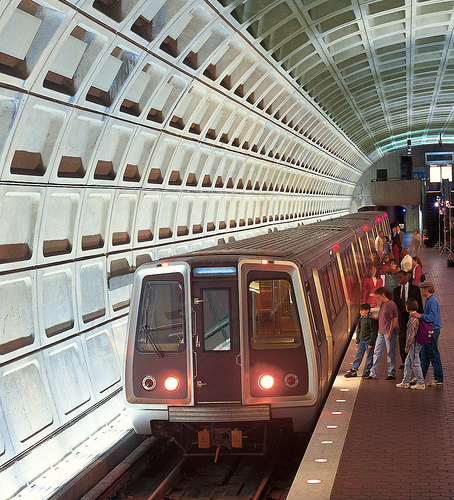 If you pay per ride, you must buy a rechargeable MetroRail Farecard at any of the vending machines located at the entrance of every station. Farecards hold between $1.25 and $45.00. It tracks your starting and ending station and then automatically debits the fare as you exit the station. You can add value to your card at any time at any station in case your card’s value is less than is needed to pay for your ride. Farecard vending machines take CASH ONLY and provided limited change ($5 max.), so using smaller bills is advised. You can however use a credit card to purchase daily and weekly MetroRail Pass cards.
Up to two kids under 5 years old ride free with a paid adult. Seniors and the disabled ride for half price. Most stations have escalators or elevators. Everyone else pays full fare. Yet when compared to fighting traffic and finding and paying for parking, the Metro is a safe, logical and easy alternative.
Metro Hours
Unlike many large city subway systems, Washington DC’s Metro subway trains do not run 24-hours a day.
Metro’s hours of operation are:
Monday - Thursday 5 a.m. to Midnight
Friday 5 a.m. to 3 a.m.
Saturday 7 a.m. to 3 a.m.
Sunday 7 a.m. to Midnight
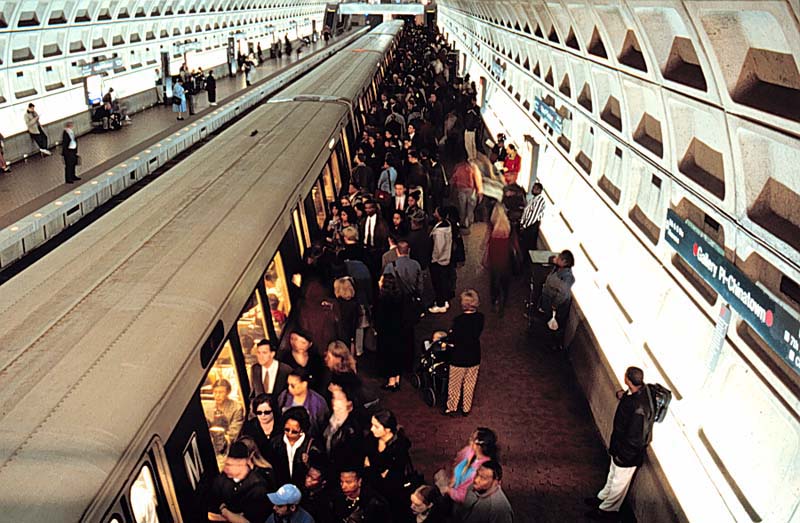
Trains run every roughly 5-6 minutes during the rush hour, every 12 minutes midday and every 15-20 minutes during the evening and night.
If traveling close to closing time, check train schedules for the last train of the night as it may leave your station long before stated system closing times. This is especially important if you need to transfer to another line mid-trip. Once on a last train of the night, it will run to the end of the line so you won’t get stranded mid-system.
 Contact Metro at 202-962-1234 or use their handy online trip planner.
Parking at a Metro Parking Lot
Some Metro stations have parking. On weekdays, it can be difficult to find a spot after 9:00 a.m. If you plan to park at any of the parking lots at some Metro stations, paying for parking requires a specific prepaid parking card.
Phot credit 1: flickr
 3 Comments
I enjoyed the article. It is very informative.
[...] your car or skip the rental car counter and take public transportation. Washington DC’s Metro subway system can get you to most tourist destinations, quickly and [...]
[...] For information on the Washington DC Metro subway system, check out my earlier post. [...]